Sunday, April 12, 2020

Motivation check in

Some  Facebook Lives ago I said “you know what athletes who qualify are doing? Still acting like athletes who qualify”. 

That still holds true. Do they get discouraged? Sure, how they deal with that setback is what sets them apart. 

Personally, Scott Iott said it best this week. 
“Racing is gone for now, but not forever” - EXACTLY. 

With so many of my athletes we take a multi year approach to goals. This will have little to no negative impact on where you want to be in 2021 season. I would argue it could actually help. 

  • Get healthy
  • Focus on weaknesses
  • Reduce travel logistics and stress 
  • Be more available to for family who has supported us through all our race seasons
  • etc. 

Personally motivation for me is rarely an issue. I am so motivated to NOT BE UNFIT, the races have just always been an opportunity for me to check in and scratch my competitive itch.

Having been out of shape and knowing how hard it is to work OUT of that period in my life… I never want to go back to that. MUCH EASIER TO STAY ENGAGED. 

Thats where I come down. 

My suggestions. 

  • Come up with some personal milestones and goals. Make them a bit obscure. Meaning find a course you want to TT, or see how long you can do a plank. Or see how much power you can hold for 90 sec, whatever. Make it measurable.
  • Im going to start to give my athletes workouts that quite honestly they could not handle before when trying to balance a race load. I believe they will see big boost in fitness. 

Tuesday, July 9, 2019

Internal Goals - The secret to taking multiple steps forward


You want to get better at racing, but not sure where to start? 

Lets first break down the two major types of goals

Internal 
Internal goals are things you have complete control over. Example of internal goals:
  • Consistent effort at your workouts or events
  • Learning a skill better such as sighting, cornering, descending, quicker transitions, or even educating yourself to name a few. 

I had minimal success when I started to do triathlon. The entire experience was exciting, yet overwhelming. I wanted to be good, andI wanted to be good NOW. I felt so far removed from where I wanted to be racing. It felt like an impossible task to get to the high level I thought would be fun to achieve.  

I surrounded myself with “faster” athletes and while fun, just got my ass handed to me. I would come home tired, sometimes discouraged, and if I am honest just frustrated that my hard work was getting me nowhere. 

One of the most frustrating things for me was seeing glimpses in training, yet at the races still have to explain what went wrong and why I could not execute. All the while listen to my friends fun stories about how well their races went. 

This is actually when I hired my first coach. While that initial coaching experience, wasn’t awesome, it was on par with the amount of money I was investing. I think it was like 65 dollars a month. That was back when I had to wait for my FAX to come every 3 weeks with instructions and workouts. OMG... LOL

While this is one of the reasons why I care so much about the athlete experience SuperFly produces, I want to get back to what I learned. 

I learned to start to focus on training that would help me overcome MY limiters. Group activities were absolutely part of the fun and enjoyment, to get better however, I had to dedicate time to my limiters. 

I started to break down what were the next 1-2 things I could do to just improve a min or two. I could wrap my head around those tasks. 

Some were simple. 
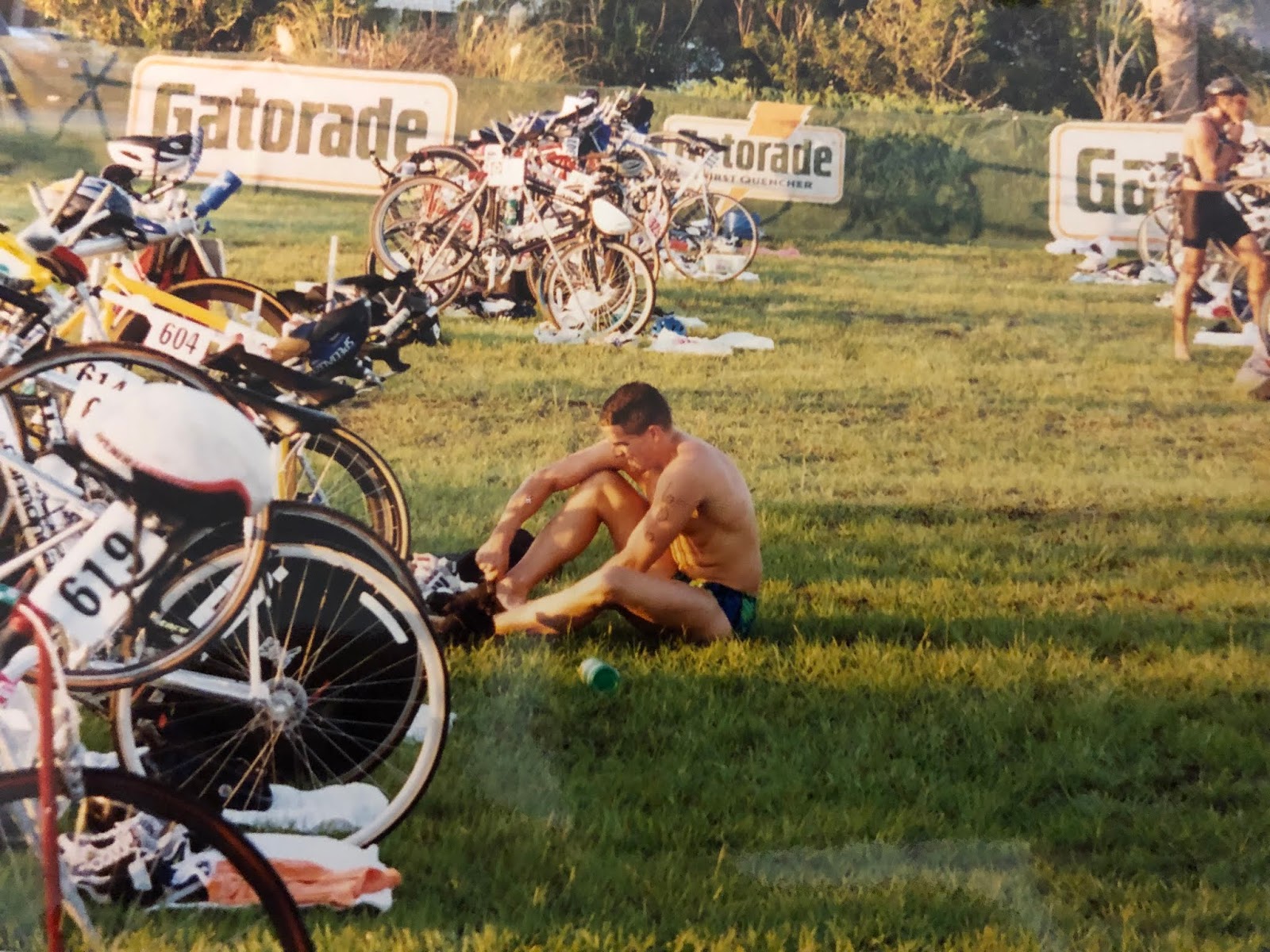
  • Don’t sit down to take of my wetsuit
  • Try to not have to breast stroke during the swim. 
  • Shoot for a 20 mph average for 40K (that was not totally internal - however vividly remember trying to break 75 min in an Olympic) 

I went from approximately 3 hours for an Olympic distance to eventually 1:56 on the same course over a few years, beating my friends - LOL! 

Once I got to that level, actually around 2:10, I started to face EXTERNAL goals.... That will be another blog. 

Friday, May 31, 2019

Pre Race Meals


I am definitely not a nutritionist. That needs to be super clear. 

However, like so many people I have struggled with getting down to race weight.  Maintaining it was even harder, and then once there trying to have the right amount of energy while racing and not having GI issues... Yup, I have had all of that. 

I have been asked a lot lately about what I eat before and during my races. Everyone may have to tweak their own plan and sub out their own products, but here are the general guidelines. 

Ironman Races

I shoot for about 1000 calories for breakfast. 
  • Goal is to eat things that are easy to digest and let blood sugar also stay stable. So you need to have the right ratios. 
  • I try to select things based on the ability to get it on race day. So anything that needs refrigerated, make sure that will be accessible. 
  • I try to eat things that will not weight my stomach down. 
  • I avoid fiber as it will potentially make me go to the bathroom, but will also require more water from your system to digest. 
  • If it's going to be a hot race, then I take a bit of salt (or even a salt tab). Do not over do the salt. 
  • IMPORTANT- while the simple carbs are awesome and needed, I personally try to eat them at the same time as some of the stuff with fat and protein. 
  • I DO NOT recommend trying to eat “healthy”. Veggies and even fruit can really make your system feel rough. 

2 shakes - I use the Isagenix regular shakes. They have non dairy, and they are even vegan if that is what you need. They travel easy as dry powder, are complete nutrition so all you need is water. Each one is about 250 calories. Before I used these I have also used the original Ensure drinks, and have also used Boost. There may be other great ones to use as well. 

2 eggs. Each are 70 calories (so 140 total). High protein, digest easy, can get them just about anywhere. These also help stabilize blood sugar

4 frozen waffles or white toast. 2 are about 110 calories.  All in all about 250-350 calories. 

I do not et them all at once, I’ll eat the solid food first then spread the shakes out while I get my stuff ready.

70.3 Races

Same as the Ironman but try to be around 750-1000 calories. 

Im usually less likely to be in a situation where I rent a place to stay that has a kitchen. I will also be less inclined to be in the area as long and will not plan to go to the “grocery” store. Therefore I tend to do just the 2 shakes and something else around 250 calories. 

  • pretzels
  • Chocolate bar (do not eat any of these simple carbs without eating one of the shakes with it. Will stabilize blood sugar if you have the sugar with the protein and fat in the shake) 

In both situations I try to eat at least 2.5 hours before the start. 

For 3-4 hour events or shorter
  • Olympic, marathons, half marathon, etc.  
Same thing 500 - 750 calories. 


Friday, March 15, 2019

Why are you doing your next race? Do you remember?


Athletes will often ask me what races I think they should do. I completely understand why they are asking, and what type of advice they are asking for. Its probably for this reason I understand why they may be frustrated with me when I try to not answer. 

They do not let doctors operate on family members. The reason, they are emotionally involved. They want the decisions to be calculated, and precise. I know that if that if I were the patient, I would appreciate someone giving me the best advice possible based on the situation. 

Races, require a different perspective. When was the last time you were forced to race an event completely unemotional? It’s your emotion and desire that will often motivate you to pull through the hard training, and the tough times in the races. You NEED to be emotionally involved. 

I had someone tell me once, “I can only make suggestions, you have to make decisions.” 

As a coach, I am here to advice, and council. I am great at telling athletes what the consequences could be given the decisions they make, or what races may or may not be a great idea, etc. They have to decide though. 

In your next race, remember you emotions. You’re “why”. I know that the training gets tough as you start to get close. This is the exact time you need to pull out those emotions and visualize the results you want. 

Get the job done. You know you can. 

Friday, March 1, 2019

What does your training and a factory car stereo have in common?


What were your goals when you decided to start triathlon? The ones you never wanted to tell anyone about? They may still be there for you. 

When you decide on a training approach, what things are you considering?

Most people want to get faster. The only other people I have worked with want to make sure they have a positive experience. Let’s be honest, nobody takes something on and hopes to go slower, or make the experience more miserable. 

So when you chose a training approach you need to consider all the angles. FTP building sets, or Threshold sets, or any other “get fast quick” approaches need to be thought out. They can work, but where do they fit in? 

You have several training modalities. All effect certain things. I like to tell the athletes and coaches I train that its like sitting at a soundboard like a music producer. Each dial or slide does different things. 

Too often, like a teenager who gets their first car, they think they like BASS. So they turn it all the way up until the windows shake. Guess what, its sounds like shit. Most have totally maxed out the factory stereo. One that was never meant to put out such “volume” (Im loving the puns in this as I write). 

To have the best music, you need to have first the right equipment. Most people will say they were not given that. It’s an excuse. Most people are capable of playing far better music. They just do not have to the knowledge to tune the equipment. 

This is why people hire a production staff. Correct, often several people play a role in developing the best outcome. Bass in this context, while fits the pun perfectly, does not just mean “base” training. It can mean anything. Most likely its the thing you like or most attracted to. 

Whats too bad is, most people could play such better music, and their car wouldn’t rattle if they just sought out some expert advice. Which car do you want to be sitting at a red light next to? 

At SuperFly Coaching. We partner and curate industry leaders to help you maximize your potential. Not happy with how your results are going? Not sure WHY you are doing threshold intervals, beyond your training partner advised you to?  We can help. 

I talk to so many athletes out there who “price shop” coaches. Fair enough. I do it with certain things to for sure, as you should. Sometimes GREAT coaching isn’t really that much more than “GOOD, or even AVERAGE coaching”. 


www.superflycoaching.com

Thursday, December 20, 2018

Tips to help reduce swim anxiety

(Thanks to Josh Scott and SwimRX for the pic!)

- The obvious- make sure your wetsuit is on correctly. Really make sure the arms are pulled well up into your armpit and over your shoulders. As well, pull it up way into your crotch so it’s not pulling “down on you”.
Leave plenty of time for this process so you aren’t struggling and frantic heading into the water. And finally if it feels too tight while swimming, tug in the neck like to let some water in. It will make it feel A LOT more roomy. You can even do that mid stroke - trust me, I have 🙂
Even in hot water races where they are barely legal, it’s a great way to not over heat.
- Find “cues” in swimming every day. The sounds or your exhale under water (I used to make a noise when i did mine and would listen for it). The sound of your “tempo” or whatever. Look for your hands as they start your catch, is another good one once in awhile.
Point is you can always seek out those “anchor points, and check in with your rhythm, even in murky water
- Practice wiggling your fingers and the front part of your stroke. If you can’t, you’re too tense. Being tense will raise your HR, and slow you down. Even in Kona, trying to make the front pack, I’d still every 7 or 8 strokes try to make sure I could do that. Be strong with your pull, but not tense
- Realize NOBODY wants. To touch you. If they do, they don’t mean it and will instantly try to not. So if it happens, not a big deal.
In cycling, when coaching my ITU athletes, they would do a drill in the grass at ale speed, trying to push each other out of the circle. They realized that if they held their arms tense, they would be pushed right out, but if they stayed relaxed and loose, they really could absorb a lot of force.
So play around with your friends a bit in the water. Push each other a bit, play tag, or keep away with a ball. Get used to contact, and i can’t tell you, if they are coming at you like that and you’re fine. You’ll be more than fine when people are trying to avoid you
- Obviously, stay off the fast lines. Swimming 10-15 yard off the side will DRAMATICALLY reduce contact. Is it a “slower line”? Not if you’re not panicking and in a good tempo
- Which is another point. StarT WAY easier than you think you should. Most likely you’re still starting too fast. So stay as relaxed as you can
One drill I used to have swimmers do, is show me how slow they can swim a length. I used to say, you can swim fast, until you can swim relaxed
- Learn breast stroke. Realize you can do that at any point of time and breathe as much as you need.
-Keep in mind the swim will be over soon, so do not try to “Pr”, just swim relaxed. I used to ask a lot of nervous swimmers, if you swam 5 min slow but the rest of your ironman went as planned, would REALLY be that upset? Most likely no.
But if you swim 5 min too fast, it can change your blood chemistry and how you burn fuels for hours.
Look at Ryf, I think she proved the swim can be over come:)
- Realize only one person can be on your left or right at any one time.
Finally I’ll say this. 
Learning ANY drill is going to teach you awareness and proprioception in the water. 
So that will be help you if knocked just know how to get yourself centered again

Friday, September 21, 2018

What pace should you hold


When I talk to athletes I train for racing, run pacing questions always come up. It would be easier if there were simple math equations to tell you what to do. There are some amazing tools out there, and they are getting better every day, but they still need to be combined with “feel”. 

Feel, must be learned though. Here is how. 

Pacing - Before we had any tools, pacing was the basic and only to predict how fast you would run. Practice trying to hold a pace in practice, expect to be able to run that in a race. Seems reasonable. Problem is what happens when its uphill, downhill, windy, or off road? 

It becomes further complicated when you are trying to pace off the bike. Trying to ensure you come off the bike in the same state every time in practice, as well as the race can be quite complex. 

It was better than nothing though. So we tried to come up with new ways to ensure success. 

Heart Rate - has been a standard way. Practice training at a certain HR, its reasonable to assume that you should be able to do the same HR while racing and feel the same. Sometimes its true, but not always. 

Heart Rate can be effected by so many things. Heat, nutrition, hydration, nerves, rest, fatigue, motivation are some of these. A lot of athletes experience a raised HR during a race. If you are not prepared for this, it can throw off your pacing. 

Power meters are new to the scene. They definitely are a HUGE step forward. These can start to add objective measures for you. Objective because quite literally, you get to know every step how hard you are working. if you see your pace drop, yet see the power output remains the  same, you can trust that everyone on the same course would be experience the same choice; either increase effort, or slow down. Your choice is up to you and your coach, but you at least now know what you are dealing with. 

We work closely with our coaches and athletes to help them with that decision you are left with. We measure and can more accurately predict the outcome give our experience. 

One of the best things you can do as an  athlete is start to gather your own experiences as well. You can start to try new tactics, learn which may be your “go to” at races. 

If you would like to speak to one of our experienced coaches to help you brainstorm some ideas, we would love to hear from you.  


superflycoaching.com

Sunday, August 19, 2018

Peaking and Racing

This is the time of the season when most people are peaking for a big event. Most likely, one you have been training for all season, or maybe even multiple seasons.

its a time a lot of anxiety and second guessing can take place, trust me I know. I have been there many times.

Think back to what it is you wanted to accomplish this season and why. Take a second to remember that while this season is important, hopefully it fits into a bigger picture. For example, I usually think in about 3 year increments for my athletes. The significance of this is only that the mission of the season should hopefully be to leave you as an athlete in better place then the year started.

So how do you do that?

Back in the beginning of the year I challenged everyone to create the “avatar”. This avatar can do everything you want to do. We want to create a list at the start of each season that identifies what we need to do to get on the same page as the avatar. The race is an opportunity to check progress. Hopefully if you hit them all, it will show. If you missed something, or did something wrong, you can fix it.

Please do not get me wrong. I am NOT telling everyone to not be a competitor. In fact, jsut the opposite. Im trying to get you to relax so you can get a true picture of where you actually stand.

I just watched on a flight to Chicago a documentary called “Strokes of Genius”. It was a story about Federer and Nadal’s rivalry. I know most of us have a rivalry with someone, even with just the clock. Without spoiling the movie what was amazing was each competitor’s internal drive to improve and excel.

At one point one of them facing defeat during a rain delay made the decision that win or lose, he would rise to the challenge. That his competitor may beat him, but he would not “lose”. How awesome is that?

Its no secret at one point Federer did lose. After winning 5 Wimbledon titles - lost. He was of course crushed. Then he realized, he needed to change his game. It needed to evolve. THAT is the chess match I have always liked. It doesn’t mean you cannot get frustrated. It just means there is something bigger than just the next race.

Check in with your training log. Check in with your coach. Ask yourself - “what do I need to do to evolve?” You may know your weakness, but it may take a few cracks at the code to break it. You should not turn that into a negative.

The other thing Nadal’s coach always told him was “good face”. He firmly believed if you are in a bad mood, you are not in a mental state to improve.

So get out there with a good face, and get ready to check in!

Tuesday, July 24, 2018

Save up to 10 sec per mile without training!


Save up to 10 sec per mile without training! 

How hard would would you have to train to take 10 sec per mile off your half marathon PR!? What would be the difference if you saved that on your run, or your transitions?

The spread of transition times can range from seconds to SEVERAL MINUTES. 


Outside of these issues, mistakes in transitions are usually outside of the prior stated. 

Setup -
  • Trying to make things too complex. Decide what you want in transition, leave the rest out. 

  • Be clean and tidy. Try to take the space you need, but only the space you need. Be respectful of people around you and realize everyone there is trying to do the same thing. If you need more space consider the depth for position of things, not just side to side.  Tuck away any straps or loose ends that could be caught in moving parts. 

  • I recommend not putting the helmet and glasses on the handlebars unless you are told to. My reasoning behind this is that we tell every athlete we coach to expect the unexpected.  Surely at some point your helmet and or glasses will be knocked off and you could be left looking for them. athletes running by with wetsuits and bikes is a bad place to leave thing gingerly hanging out int he open. 

Instead I always put my towel down, then my number belt, then my run shoes on top of the belt, then my helmet upside down, straps out with my glasses inside them. 

As I pull my wetsuit or skin suit down I gram my helmet and put it on as I step out of my suit. No time lost, and no risk. 

  • make sure your garmin is sync’d with all your power devices BEFORE you get to transition. Also I make sure the auto off feature is turned off. There are times, after sitting idle for a long time, the power meter will lose connection with the garmin. I usually recognize it right away when riding. Just power off and then back on, it seems to work each time

  • Be decisive and quick, but not panicked. If you try to rush, you will make mistakes, fumble with things end up taking more time then just being clear and deliberate. 

  • I recommend first learning how to take your feet out of your shoes coming into T2. Once you master that skill, you can then start working on coming out of T1 and putting your feet into the shoes while riding. 

*As a side note- When learning to put your feet INTO your shoes. I have always used the step over the top tube method. Meaning I know flying rocket mounts look kind of cool, but they are more dangerous and when you  are racing long course, a few seconds is not worth the downside to looking like a jackass in front of everyone if you get it wrong. 

Additionally, you need to be aware of when you will need to have your feet in the shoes, or wait until you should try based on the terrain coming out of T1. 

Coming out of T2

Look, if you need to go to the bathroom, or fix an issue in transitions - DO SO! I would never tell an athlete to try to “hold it”, or not fix an issue. Ignoring these, could in fact cost you more time then the time you feel you may save skipping it. Address these issues, and move on though. 

  • once you take care of what you need, the key is making forward progress. If you can put your number belt on while walking, do it. If you can adjust your hat, your jersey, eat your gel, whatever - do that. No need to stand still

  • once you start your run, I recommend starting with slightly smaller steps then you would normally take. This will help your legs transition

Be safe and thank a volunteer!!

Monday, June 25, 2018

CP30 Testing - What and Why


There is a general rule of thumb - what you can do on your own in training, will predict what you are capable of in a race. I believe this to be true. If I am honest, I haven’t tried to test a 6 hour run race at the 3 hour pace I gritted through in training a few times, but I think up to reasonable distances, and especially around FTP and threshold testing, this is a fair statement.

So if we know:
  • "CP" Stands for Critical Power or Critical Pace. In other words "The best effort you can do for" and the number is the minutes. So CP30 = "The best effort you can do for 30 min".  CP60 would be the "best effort you can do for 60 min." and so on.
  • what you do on your own you can do for 2x the duration in a race. 
Then consider this too

Anytime you DOUBLE duration, you can predict a 5% drop off in output. 

OK. So what does this mean when considering FTP tests on the bike? 

Lets remember true FTP is what you can do for an hour (CP60) in a race. So, if you did a 30 min all out RACE that would tell you your (CP30), which you would then must subtract 5% to predict a CP60.  

However, remember our rule above. What you ALONE predicts what you can do for double the distance in a race. So if you did a solo CP30 effort there would be no need to subtract the 5%. 

This is also why I do not like testing for 20 min. 
  • Most happen in a group environment, so you have outside motivation
  • Its not a clean doubling effect.  So even if you do subtract 5% its still going to leave you a bit high in terms of FTP prediction
  • A lot of people become good at “training for the test”. Therefore, its not a actual indication of their ME (Muscular Endurance)  

Monday, April 23, 2018

Time crunched? Returning from injury? You can still train quite effectively if you remember these three things!

Volume of training is defined by 3 things:

1. Duration
2. Frequency
3. Intensity

Too Often people spend too much anxiety just worrying about duration. Ask just about any athlete how well training is going, they will almost ALWAYS respond with this metric.

The irony, it’s probably the single worst indicator of success, UNLESS you are trying a distance for the first time. It doesn’t matter how fast you can go, if you cannot complete the distance.

Time Crunched:
If you are short on time, bump the intensity, and shorten the total workout. If you are training for a half marathon for example, as your coach for equivalent 5K run paces and change the set.

3 x 15 min @ half marathon goal may not be realistic on a particular day. However you could do 4 x 6 min @ 5K effort and get a great fitness response, just as an example.

Coming back from injury?
Use frequency. Shorten the duration, not only of the total workout but build in more rest intervals, to include even walk breaks to help build duration and increase overall volume. If you use a muscle 5 min or less for aerobic exercise, it's is a lot less likely to have sustained inflammation.

So 3 x 60 min runs may be a bit aggressive to return. Change it up to 4 x 30 min runs with a day between with 4 min run, 1 min walk.

Too often we get stuck in the ruts we are used to. Changing perspective and ideas can really help!

Sunday, October 22, 2017

What to do in the off season

If you want to take racing to the next level next year, you must get the off season right.  

That doesn’t mean you cannot, or should not take a break, but you need to use this precious time to apply some of the thoughts and adjustments you have been thinking about making to see how they affect things, with time to adjust if needed.  

I always love the offseason because I get to workout and work hard, but I don’t always HAVE to if life gets in the way, which it often does mid-season.

Some people like to put on a bunch of weight, allow themselves to eat whatever and not worry too much about – well anything. I get it, and it can be tempting, but even putting performance aside for next year, it's not healthy. You shouldn’t allow yourself to yo-yo so much with your weight. Sure, put on a few extra pounds, but the reality is the work it takes to get them off, the fact that you are effecting metabolic health and function, and let’s be honest, as we age, it's harder to get off later. That extra work to get back to even used to frustrate me. The extra weight when you start to run can be an injury risk as well.

For me, I would put a 10-pound limit on myself. If I got up to that much over then I knew it was time to dial it back for a bit and pay more attention.


In fact, after the holidays I like to do at least 1 – 30 day cleanse with Tanya just to get my metabolism running sharp again and put myself right back to where I need to be to have an awesome year.

You can join our community to get on our live chats to get tips and ideas on how and what workouts may best help you this offseason.